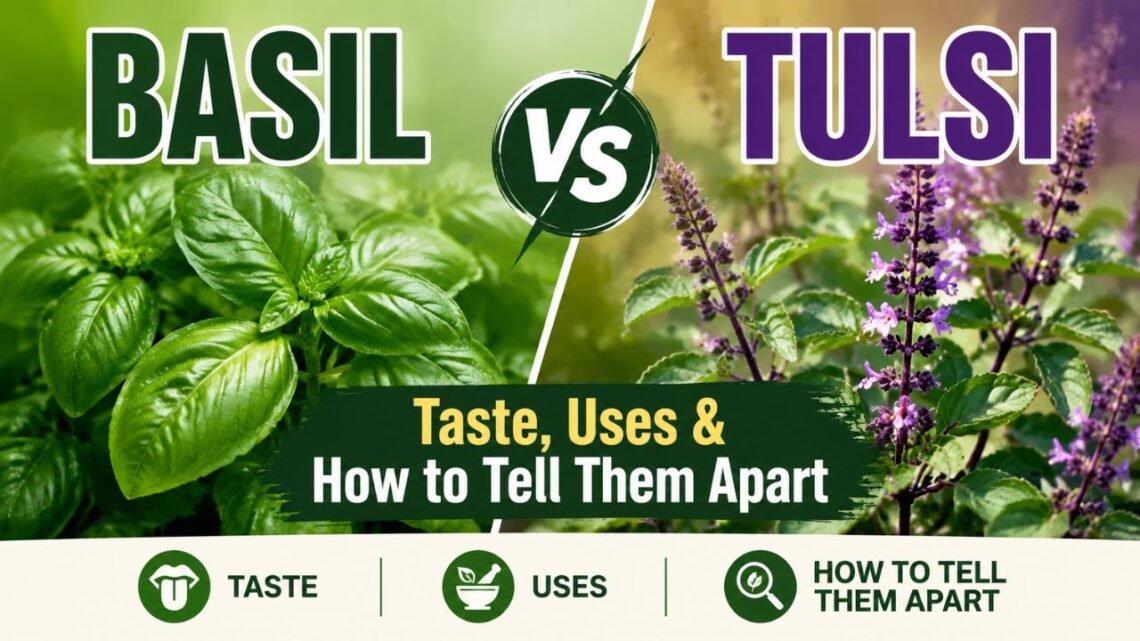
Basil vs tulsi confuses even seasoned cooks and tea drinkers, and honestly, it makes sense why. Both herbs grow with similar green leaves, both carry a peppery scent, and both trace back to the same plant family. So when someone spots tulsi labeled as “holy basil” at a store, they naturally assume it’s just basil with a fancier name attached.
That assumption, though, misses some important details. These two herbs differ in taste, in how they are used, and even in the cultures that shaped their history. One belongs mostly in a cooking pan. The other belongs mostly in a teacup. Once you see the differences laid out clearly, picking the right herb for the right purpose becomes much easier.
Difference Between Basil vs Tulsi: Everything You Need to Know
| Feature | Basil | Tulsi |
|---|---|---|
| Scientific Name | Ocimum basilicum | Ocimum tenuiflorum (formerly Ocimum sanctum) |
| Common Name | Sweet basil, culinary basil | Holy basil |
| Family | Lamiaceae (mint family) | Lamiaceae (mint family) |
| Flavor | Sweet, mild peppery | Spicy, bitter, clove-like |
| Primary Use | Cooking (sauces, pesto, salads) | Tea, Ayurvedic wellness |
| Leaf Shape | Broad and oval | Smaller with pointed tips |
| Leaf Surface | Smooth and glossy | Slightly hairy |
| Stem Color/Texture | Green, smooth | Green or purple-tinted, fuzzy |
| Flower Color | White to purple | Small purple or white |
| Plant Height | Bushy, medium spread | Compact shrub, ~3 feet |
| Origin | Tropical Africa, Southeast Asia, parts of India | North-central India |
| Cultural Role | Culinary staple, no religious significance | Sacred plant in Hindu tradition |
| Wellness Reputation | General antioxidant support | Classified as an adaptogen; used for stress support |
| Best Used In | Italian, Thai, Vietnamese cooking | Herbal tea, decoctions |
| Growing Conditions | Warm, sunny | Warm, sunny (same as basil) |
What Makes Basil vs Tulsi Different in the First Place
The family of Basil and Tulsi is Lamiaceae, also known as the mint family. There are more than 7,000 species in this family, and having the same family does not imply sharing an identity. Rosemary, sage, and oregano, too, are not from the same family, and no one mistakes them for mint.
The actual line makes itself felt at the species level. The scientific name of culinary basil is Ocimum basilicum and that of tulsi is Ocimum tenuiflorum, respectively, and occasionally Ocimum sanctum. The one variation in scientific names is what shows nearly all the rest, such as taste, and the manner in which each of the herbs is used in various cultures.
However, consider this one as a comparison between a lemon and a lime. They are both citrus fruits, they both appear somewhat similar, and no one makes a lemon pie out of limes and calls it a lemon pie. Basil and tulsi are similar.
Basil And Tulsi Botanical Classification
The herbs are of the same genus, Ocimum, but the real separation between them is given by the names of the species. The name of Basil is Ocimum basilicum, and the name of tulsi is Ocimum tenuiflorum. That single naming difference determines almost all the other features of the appearance, flavour, and application of any particular vegetable.
Family And Species Breakdown
- Basil and tulsi are both in Lamiaceae, or the family of mints, which includes rosemary, sage, and oregano.
- The scientific name of basil remains the same throughout most culinary types of basil, Ocimum basilicum.
- In earlier writings, Tulsi is known by the name Ocimum sanctum, but it has been replaced by modern botanists with Ocimum tenuiflorum.
- Being in the same family does not imply identity, as mint and sage are in the same family as well, and nobody gets them mixed up.
Is Basil and Tulsi same plant?
People keep asking this question because tulsi gets sold as “holy basil” in Western markets, and that name creates instant confusion. But basil and tulsi are not the same plant. They are allied species which have been separated by centuries, by climatic conditions, by the varying traditions of different peoples, by the different forms of daily application.
Tulsi is a religious place in Hindu families in India, and many it is planted outside of doorways. Basil, in the meantime, became a worldly kitchen habiliack without having to bear the same religious baggage. Therefore, they differ in the functions of the two herbs, although they are of the same family tree, their functions in life were separated a long time ago.
Flavor Comparison Between Basil And Tulsi
Taste is where the difference between these two herbs becomes obvious almost instantly. Basil is sweet with a mild peppery bite and can be easily combined with tomatoes, cheese, and olive oil. Tulsi is more bitter and spicy and can even be bitter-tasting, precisely why it goes better steeped in hot water than in a sauce. An individual who attempts to drink tulsi tea with the anticipation of the warm taste of basil is often taken by surprise. The clove-like acuity is immediately noticeable, and it requires a swipe or two to acclimatize to it.
Basil Vs Tulsi Leaf Identification
Spotting the difference between these herbs gets easier once you know exactly what to check. Leaf texture, stem color, and flower shade all give away which plant you’re looking at, even from a short distance.
| Feature | Basil | Tulsi |
| Leaf shape | Broad and oval | Smaller with pointed tips |
| Leaf surface | Smooth and glossy | Slightly hairy |
| Stem color | Green | Green or purple tinted |
| Flower shade | White to purple | Small purple or white blooms |
| Plant height | Bushy, medium spread | Compact shrub, around 3 feet |
Gardeners who cultivate the herbs together tend to say that the stem offers it away the most. The stems of the tulsi are fuzzier and basil is smooth to the touch.
Where Basil And Tulsi Originally Come From
Growing in north-central India thousands of years ago, Tulsi never left her Indian cultural home. It is mentioned in Ayurvedic literature all the time, and is planted in courtyards and in temple gardens throughout the country today.
The origin story of Basil cuts across tropical areas of Africa and of Southeast Asia, even parts of India. Surprisingly, ancient Vedic texts in India refer to basil long before it could be recognized as one of the kitchen necessities in Italy. Trade routes took basil to Europe, where it, over time, was assimilated into Mediterranean cuisine, but not its native tropical origins.
Wellness Roles Of Basil And Tulsi
Tulsi has a much greater reputation in wellness than basil. It is an adaptogen according to Ayurvedic practitioners, which is a kind of herb that is supposed to enable the body to react to stress more positively. This notion is echoed by some initial clinical trials, which have revealed either symptom improvements in stress-related symptoms in individuals who took tulsi extract daily over a few weeks.
The same wellness spotlight does not follow Basil. It is rich with beneficial antioxidants and oils, but no one will sell it as a de-stressing plant as they sell tulsi. It is still strong in taste, not medicine.
Wellness Traits Worth Knowing
- Tulsi gets classified as an adaptogen within Ayurvedic tradition
- Basil offers general antioxidant support without a specific therapeutic reputation
- Tulsi tea often gets paired with ginger or honey to balance its sharper taste
- Neither herb should replace medical treatment, especially for anyone managing ongoing health conditions
Cooking Uses For Basil Vs Tulsi
Basil earns its place in kitchens everywhere. It shapes pesto, brightens Caprese salad, and shows up regularly in Thai and Vietnamese dishes too. Basil is mostly added at the last moment during cooking, as heat easily destroys the fragrant scent of this type of basil.
Tulsi hardly features in cooked food. Rather, individuals use it as tea or combine it with Ayurvedic decoctions targeting health as opposed to flavor. Imagine two individuals in the kitchen, where one is making dinner and the other is preparing tulsi tea to rest after a stressful day, and the other is adding fresh basil to a bowl of pasta sauce. They are both dealing with herbs which belong to the same family, but neither would take the place of the other.
Choosing Between Basil And Tulsi For Your Needs
How to select the correct herb is simply a question of what you need to accomplish. Basil is always required when cooking, due to its well-balanced and familiar taste. Instead, wellness practices and soothing teas require tulsi, which is where its image and the history of usage shine the most.
Other homes are cultivating herbs in their own homes as they, too, grow well in the same temperatures and sunshine. Holding them in different buckets is also a method of preventing confusion of the leaves in the future, since they may be similar to an unfamiliar person to the appearance of both plants.
Mistakes People Make Confusing Basil And Tulsi
The majority of the misunderstanding between these two herbs can be easily eliminated by identifying a few common habits, which will make the next shopping experience a lot easier.
Frequent Errors To Avoid
- Buying tulsi tea while expecting basil’s sweet, familiar taste
- Cooking with tulsi in dishes originally designed for basil, which throws the flavor balance off
- Assuming any product labeled “holy basil” automatically matches garden basil
- Skipping the scientific name on packaging, which is the quickest way to confirm what you’re buying
Checking the botanical name before purchasing takes only a few seconds and prevents disappointment later, whether you’re shopping for tea or cooking herbs.
Final Thoughts on Basil vs Tulsi
Basil and tulsi share a family tree, but that’s really where the similarities stop. One is in your cooking pot and adds sweetness and balance to the sauces and salads. The other in your teacup carries centuries of tradition and a taste that cannot be ignored but must be tasted.
Therefore, next time someone decides to ask whether basil and tulsi are similar or not, you will have a clear picture of it. They are connected, yet they have entirely different roles in the kitchen, wellness practices, and the history of cultures. Having known that difference makes you a smart shopper, a great cook, and somebody who has a clue of what he/she is putting into his/her meal or his/her tea.
Also Read About: Top 12 Perennial Herb Varieties for Every Garden
Frequently Asked Questions
Is basil and tulsi same herb used in cooking?
No, they are different herbs. Basil suits cooking well, while tulsi mostly gets used for tea and wellness purposes rather than everyday recipes.
Can tulsi replace basil in pasta sauce?
It’s not recommended, since tulsi’s sharper, spicier flavor changes the taste of dishes built around basil’s sweetness.
Why does tulsi get called holy basil?
Tulsi carries that name in Western markets because it resembles basil and shares its plant family, along with its sacred status in Hindu tradition.
Does tulsi tea taste similar to basil tea?
Not really. Tulsi tea tastes spicier and sometimes bitter, while basil tastes much sweeter and milder overall.
Which herb offers more wellness benefits, basil or tulsi?
Tulsi holds a stronger wellness reputation, especially for stress support, while basil mainly offers general antioxidant value.
How do I identify tulsi leaves compared to basil leaves?
Tulsi leaves look smaller with pointed tips and grow on slightly hairy stems, while basil leaves stay broader, smoother, and glossier.
Is it safe to drink tulsi tea daily?
Most people tolerate tulsi tea well, though anyone pregnant, nursing, or taking regular medication should check with a doctor first.
Do basil and tulsi grow under the same conditions?
Yes, both thrive in warm, sunny weather, which makes it easy to grow them together in a home garden.
Which herb works better for Italian cooking, basil or tulsi?
Basil works far better for Italian dishes, since its sweet and balanced flavor suits sauces, salads, and pasta perfectly.
What is the easiest way to tell basil and tulsi apart quickly?
Check the stem texture first. Tulsi feels noticeably hairier than basil, and that difference alone helps identify the plant fast.