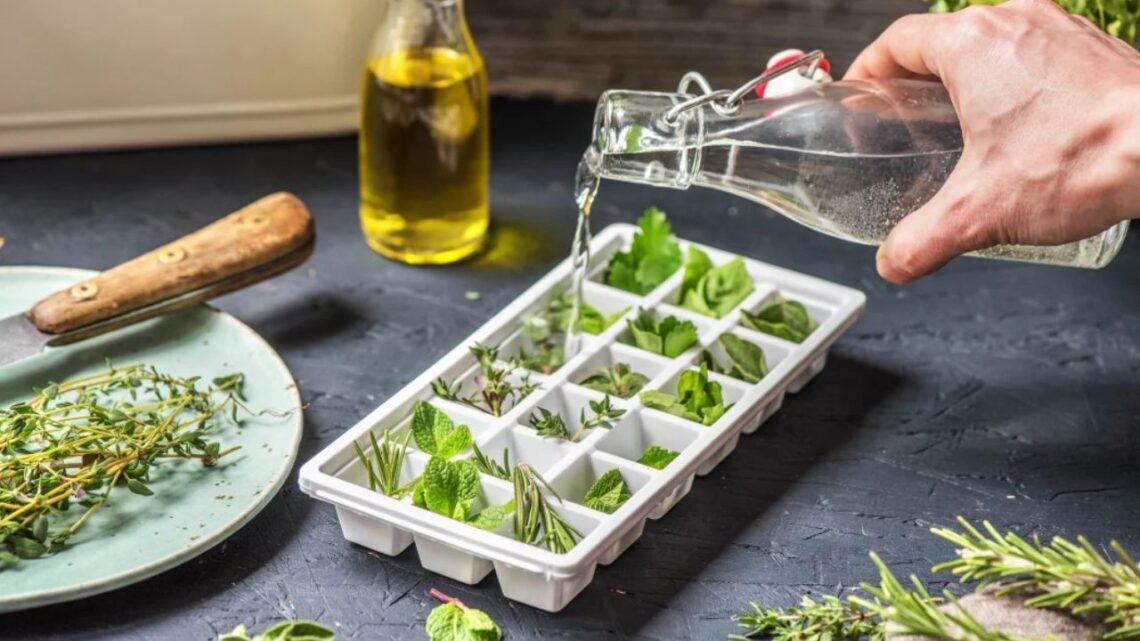
It is much simpler to retain the natural oils and aroma of herbs when you understand How to Freeze Fresh Herbs in a manner that preserves the natural flavour of herbs. Most cooks like fresh herbs but have a problem with their limited lifespan, they wilt, soften or lose fragrance in a few days. The freezing offers a viable and efficient remedy since it offers a way of preserving a large part of the herb essence at its maximum. Herbs when frozen immediately after picking or buying them still exhibit a relatively very pronounced flavor compared to the herbs that have allowed their flavors and quality to wither in the refridge. Knowing the process would allow the development of a reliable supply of tasty herbs that would help improve the meals even after the farming season is over.
When subjected to heat, air or fluctuation in moisture, herbs lose their aroma very fast. Freezing helps to preserve such changes by freezing vital oils and halting enzyme activity. This guide explains the techniques to retain the most flavor, the frozen herbs science, and the easy modifications that can ensure you retain the quality. You will discover that by learning How to Freeze Fresh Herbs you can be able to change your cooking habits and make your kitchen run more efficiently and have your food always tasting good.
What Are Herbs?
Herbs are green plants that are fragrant and are mostly prized due to the oils that are naturally stored in the leaves. These oils provide the aroma and taste that make every herb unique enabling them to either take dishes to the next level either subtle or bold depending on the way they are used. Herbs are different to spices since spices are typically seeds, barks or roots whereas herbs are based on tender leaves and stems. Herbs are sensitive, thus they decay easily unless they are carefully handled due to their sensitive nature. It is this weakness that makes one think that learning How to Freeze Fresh Herbs becomes necessary to those who frequently use herbs.
Culinary herbs can be divided into two broad groups, including soft and leafy like basil, parsley, cilantro, dill, and more robust and the woody group, which includes rosemary, thyme, and oregano. The soft herbs are likely to dry out and lose color fast though the woody herbs can resist the same but still can lose their flavor in improper storage. The various forms have an effect on the reaction of each herb to freezing. To know How to Freeze Fresh Herbs, one needs to have knowledge of these basic differences, as the way you choose to freeze your herbs will have an influence on the quality and the life of the herbs kept.
Herbs have been utilized in food preparation over centuries due to the fact that they possess the capacity of improving both the aroma and the taste. They determine the nature of the sauces, broths, stir-fries, marinades, and many other foods. Freezing increases their supply way beyond the harvest time and assists in preserving their critical role in cooking without being dependent on fresh supplies at all times.
Why Freezing Herbs Works Better Than Refrigeration?
The freezing of herbs has a great advantage over refrigeration since a low temperature reduces the decomposition rate of the necessary oils that have a flavor. Refrigeration can maintain the herbs in a short time after which they become soft and lose their aroma. By preserving enzyme activity, moisture, oxidation, and the freezing process prevents much of the original characteristics of herbs by stopping them. Learning How to Freeze Fresh Herbs would make sure that you freeze your fresh herbs at their prime when they are best and have a much better time eating them in the future.
There is also an effect of moisture changes that result in premature spoilage of herbs stored in the refrigerator. The leaves are either soft or greasy and the odor is weak. Freezing prevents such problems by preventing decay in its initial stages. Freezing the herbs means that they will always be available when they are required to offer a steady supply of color, aroma and taste, leaving the home cook not always in the dilemma of whether the herbs have expired. Using the right freezing technique, the flavor will still be brightly impressive months later which explains why many cooks have been depending on the technique.
What Happens to Herbs During Freezing?
As the herbs get to the freezer, the water in the cells transforms into ice creams. These crystals increase and break the walls of the cell that gives the herb an alternate tough and fresh taste. That is why frozen herbs soften after being thawed. Textures do not make a difference when the herbs are cooked in hot food since the heat destroys the structure of the herbs. The issue is in preserving the essential oils and it is here that the learning on How to Freeze Fresh Herbs will be significant.
Freezer burn is caused by the air and causes loss of aroma and dryness. The flavor compounds found within the herbs are destroyed after a prolonged time in oxygen. This damage can be avoided by reducing the amount of air contact which enables the herbs to retain their brightness. To keep herbs cold, it is possible to freeze herbs in oil, freeze herbs flat, or freeze herbs in water. The difference in these techniques varies in terms of speed and convenience but each of these techniques contributes to maintenance of the necessary qualities that make herbs useful in cooking.
Types of Herbs That Freeze Well and Their Distinct Behaviors

The same could not be said of herbs as they do not respond to freezing since their textures and oil content are not similar. Certain herbs are kept vibrant due to being frozen in oil and others are better preserved thanks to being frozen in water or a brief blanching process. Knowing such differences can guide you to make decisions on How to Freeze Fresh Herbs so that they retain their flavor and color for several months.
The soft herbs are very perishable hence the use of oil prevents the air exposure. Woody herbs remain longer and usually freeze successfully in water or entire sprigs. The blanching process inhibits discoloration in herbs with a quick darkening process. The correct way of doing things is used to make sure that there are improved outcomes of cooked food done.
Best Freezing Methods for Different Herbs
The table below summarizes how various herbs behave during freezing, making it easier to select the approach that preserves their quality.
How to Freeze Fresh Herbs?
To decide on a freezing technique, it is good to realise that various herbs do not react to cold storage in the same way. Both methods preserve flavor differently, and therefore when one chooses the correct method, the results of the cooking are improved. The three most viable approaches are explained in the following sections.
1. Freezing Herbs in Oil for Exceptional Flavor Preservation
This technique is effective in sensitive herbs as oil protects herbs against air and retards oxidation. It makes them fragrance longer as well as their color more permanent in long time storing. This method is more popular with many cooks as it combines convenience and superior flavour retention.
Freezing in oil is also an easy process: chop the herbs, dry them, put them in trays of ice cubes. And cover them with a neutral oil. The cubes become quickly frozen and once they are warmed in any hot dish like a sauce, sauté or stir-fry, they give off their aromas.
-
Protects delicate oils from oxidation.
-
Melts fast in hot dishes.
-
Helps keep color and aroma intact.
2. Freezing Herbs in Water for Slow-Release Flavor
Herbs are more likely to maintain their shape when frozen in water and firmer or woody types. It produces slow melting cubes that impart flavor to the food slowly thus making it best to use in soups and stews. An easy and reliable method of storing firmer herbs.
To freeze herbs in water freeze herbs in ice cube trays. Also, chop or leave the herb whole, and fill cubes with water, and freeze. The cubes are more effective in recipes that require longer time to cook.
-
Best for hardy, woody herbs.
-
Releases flavor slowly during cooking.
-
Works well for soups and stews.
3. Flat Freezing: A Convenient and Space-Efficient Method
The best alternative to this is flat freezing because you require small portions of herbs that do not require thawing entire cubes. It also occupies less space in the freezer and is easily accessible in the event of a hectic cooking habit. Most domestic cooks consider it to be the most adaptable approach.
In order to freeze herbs in a flat form, add a bit of oil, arrange in a thin layer inside a freezer bag. It takes out all the air and freezes the herbs. You are able to cut any quantity that you require.
How to Freeze Fresh Herbs: Comparing Freezing Methods and Their Best Uses

This comparison will help you to choose the best alternative depending on your cooking patterns. The benefit of all herbs is that they can be well dried before being frozen, too much moisture makes an ice and this dilutes the flavor.
How Long Frozen Herbs Last and How to Maximize Flavor Retention?
The extent of the shelf life of frozen herbs is different when it comes to the way it is prepared and stored. Oil preserves herbs better and enables the herbs to retain their taste between five to six months. Freezing in water will preserve herbs fairly well although after a few months the flavor will fade away. Flat freezing is good in the case of herbs. That you intend to use regularly since the aroma is preserved with minimal ice crystals. These timelines are important in the successful mastering of How to Freeze Fresh Herbs.
Shelf Life Expectations for Frozen Herbs
Airtight storage and proper removal of excess air extend the usable life of frozen herbs and help retain more of their original fragrance.
Conclusion: The Long-Term Value of Learning How to Freeze Fresh Herbs
Having learned How to Freeze Fresh Herbs, you will be able to enjoy the colorful virtues of herbs even after they begin to perish in nature. All three approaches, such as oil, water, blanching, and flat freezing. They have their own benefits that can be used to maintain critical oils, color, and aroma. Frozen herbs can be frozen when they are fresh so you get to have the properties that make fresh herbs. They stand out over the dried ones and as such, you will have a reliable source of flavor whenever you want it.
This knowledge too eliminates wastefulness, promotes creativity in cooking. And makes you use herbs more often since you know that they will not go bad easily. When you learn How to Freeze Fresh Herbs with care, you are motivated to use herbs in your cooking at any given time of the year. The ability adds flavour, convenience, and an invaluable preparation feeling to every meal that you make.