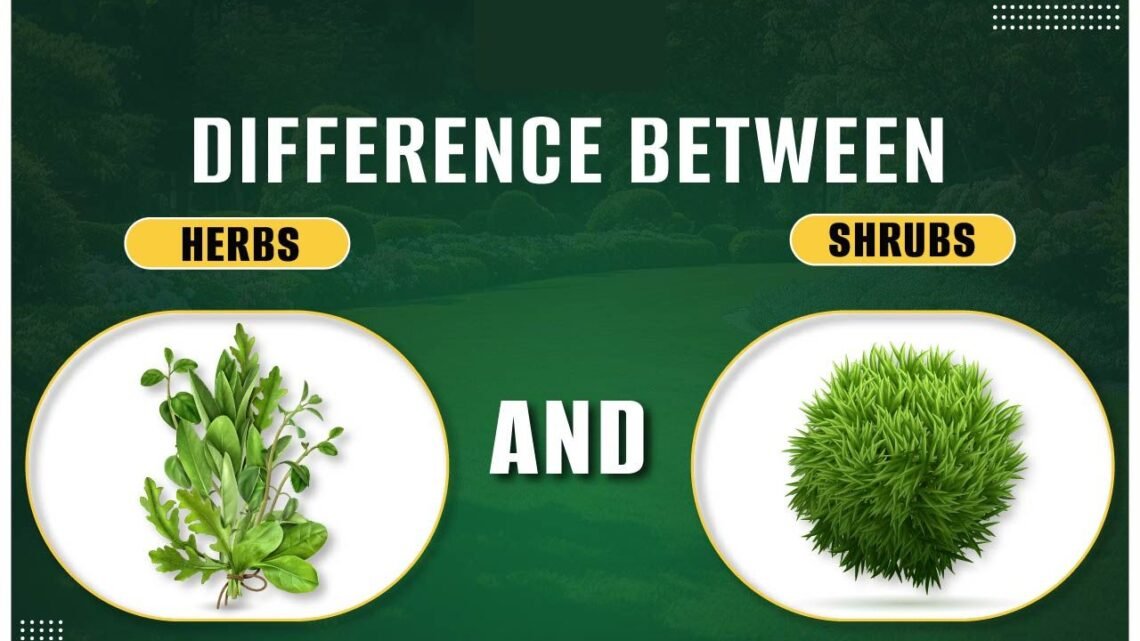
Plants are of various shapes and sizes. Others are some plants which are small and have frail stems and some are tall and stronger. There are different groups of plants which botanists group together to simplify the study of their features. A classification that is often used in plant biology describes the difference between herbs and shrubs. This difference can be understood so that students, gardeners and nature lovers can name plants as they should be.
Apart from trees, two significant plant types which are common in gardens, farms, forests, and natural landscapes are herbs and shrubs. Despite the fact that they both are classified under the plant kingdom, they are very different in terms of structure, height, the composition of the stems and the life cycle. Moreover, Herbs are normally shorter plants whose stems are tender, and shrubs are taller with woody stems.
Hearding about the difference between herbs and shrubs also makes people comprehend the patterns of the growth of plants and the way the various plants can be able to survive in different environments. Therefore, Herbs are fast growing and are further utilized in cooking or in medicine. Also, The shrubs tend to have extended lifespan and they are significant in landscape and ecological composition.
This guide defines the nature, examples, structure and application of the two types of plants. Moreover, At the conclusion of this article, the reader will have a clear idea on the difference between herbs and shrubs and how one can identify them in their daily lives.
Learning About Plant Classification
Plants are characterized according to their physical form and mode of growth. The classification assists scientists and learners to classify the plant kingdom into manageable categories. There are plants which are so tall and grow to have thick trunks as well as those which are so small and soft.
Herbs and shrubs are represented by two of the most widely researched types of plants. These categories are only distinguished by the type of stem as well as the pattern of branching, height and durability. Herbs have tender and soft stems whereas the shrubs produce and grow woody stems.
As individuals look at plants in gardens or fields, they usually notice that some plants are small as compared to others which look bushy and bigger. It is this that brings out this difference between herbs and shrubs. It is possible to identify plants much easier, knowing this difference.
Plant classification is also useful in enabling farmers and gardeners to select the appropriate plants in a certain purpose. Herbs are commonly cultivated as leaf and medicinal, while shrubs are cultivated as flowers and fruits, and ornaments.
What Are Herbs?
Herbs are tiny plants, the stems of which are soft, green, tender. These stems have very minimal woody tissue and therefore they are flexible and delicate. Due to this structure, herbs are not able to grow on a very high level and are often near the ground.
The majority of herbs are fast growing and do not need a lot of space to be cultivated. Their stems are not hard at all, and this is one of the most significant features that can be used to identify them. The life cycle of many herbs can also be accomplished in a single growing season, although there are those varieties that can be longer lived.
The other significant characteristic of herbs is that they can be removed with ease out of the ground. They are generally shallow rooted and can therefore absorb the nutrients in the upper soils.
The difference between herbs and shrubs is possible when comparing the strength of the stem and the size of a plant. Herbs are smaller and tend to be softer whereas shrubs grow stronger and become wooden.
Significant Features of Herbs
- Herbs are not big and they grow near the ground.
- Their stems are soft, green and tender till the end of their lifespan.
- Large plants have many branches unlike herbs.
- Their root systems tend to be shallow.
- There are a great number of herbs which suffer a short life.
These characteristics render the herbs different among the plant groups and distinguish them among the shrubs.
Common Examples of Herbs
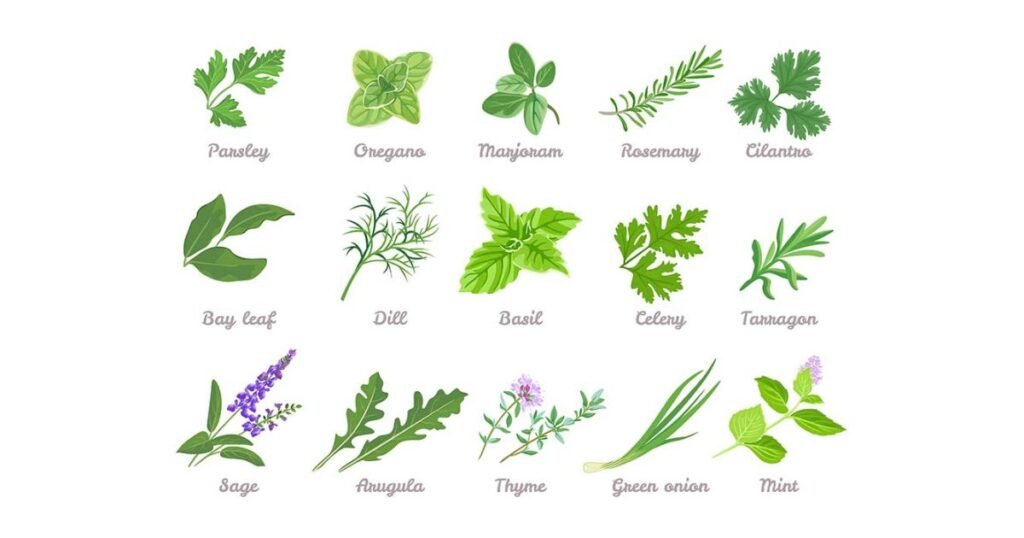
Herbs have a lot of application in everyday life. A lot of herbs are cultivated in home gardens since their leaves are consumed in the food. There are also herbs which are medicinal in nature and are utilized in the traditional medicines.
It is necessary to know that herbs have similar structural features before analyzing a few of them. Their stems are soft and flexible and this is their basic difference between herbs and shrubs.
The table below gives the highlight of some of the frequently used herbs and their applications.
Prior to the presentation of the table, it is appropriate to mention that the herbs are commonly grown in most regions of the world.
| Herb | Primary Use | Plant Feature |
| Coriander | Cooking and garnishing | Soft stem |
| Basil | Medicinal and culinary | Aromatic leaves |
| Parsley | Food seasoning | Tender stem |
| Thyme | Herbal remedies | Small plant structure |
| Mint | Flavoring drinks and dishes | Fast-growing herb |
Most people keep these herbs in their homes and gardens and thus this is a well known example when learning about the types of plants.
What Are Shrubs?
Shrubs are medium sized plants between the sizes of herbs and trees. They are stronger as their stems are woody and this enables them to grow higher and have several branches. Due to this woody structure, shrubs are able to survive over a long period of years.
Shrubs have many branches growing out of the base of the plant unlike herbs. These branches run further apart forming a bush-like and thick structure. This is one of the most evident forms of growth of shrubs.
The other important feature of shrubs is the well developed root system. Their roots go deeper into the soil making them stable and it also enables them to take in nutrients that are in deep soil.
On viewing the shrubs, then one can easily notice the difference between herbs and shrubs. The herb plants are delicate and short lived compared to the sturdier plants which are the shrubs.
The Salient Shrubs Characteristics
- Shrubs are medium plants which grow higher than herbs.
- They have hard, woody and sturdy stems.
- On the base they give numerous branches.
- The lifespan of shrubs is normally many years.
- They have deeper and stronger roots.
These features assist in the differentiation of shrubs and herbs in the natural habitat.
Examples of Shrubs in Nature
Shrubs are very popular in gardens, parks and landscapes. A lot of shrubs flower or give fruit, and are useful not only as ornaments, but also as money plants.
It is significant to know about shrubs and their difference with herbs in general, before looking at the examples, making up the fact that the stems of shrubs are woody and that the stem is branched. This is one of the structural features that indicates the difference between herbs and shrubs.
The following table enumerates some of the common shrubs and their common applications.
| Shrub | Main Use | Structural Feature |
| Rose | Ornamental flower | Woody stem |
| Hibiscus | Garden decoration | Bushy growth |
| Lavender | Fragrance and oils | Strong branches |
| Jasmine | Aromatic flowers | Medium-sized shrub |
| Orange plant | Fruit production | Woody plant structure |
Such shrubs are very popular garden and landscape shrubs in most places.
Natural Difference Between Herbs and Shrubs
The plant structure allows one to understand why a herb and a shrub are different. Such variations are pegged on a number of things such as the height of plants, the nature of the stems, the branches food pattern, and the strength of the roots.
Herbs are smaller plants whose stems are delicate. Their stems do not have much woody tissue and so restrict their height. Shrubs on the other hand have a woody stem which enables them to grow bigger and bear several branches.
It is useful to keep in mind before delving into the finer analysis of the detailed comparison table that the herbs and the shrubs are of the same plant kingdom. Nevertheless, they are differentiated on the basis of their structural features.
| Feature | Herbs | Shrubs |
| Plant Size | Small plants | Medium-sized plants |
| Stem Structure | Soft and green | Hard and woody |
| Branching Pattern | Few branches | Many branches |
| Lifespan | Short or seasonal | Long-lasting |
| Root Strength | Shallow roots | Strong roots |
This analogy brings out the critical difference between herbs and shrub in plant biology.
Patterns of the Growth of the Herbs and Shrubs
The patterns of plants can be used to get valuable information on the plant classification. Herbs and shrubs are vastly different in the manner of growth and development.
Herbs grow fast yet they are in relatively small sizes. They have soft stems that are not capable of holding big heights or branches. Due to this constraint, the herbs tend to grow near the ground.
The taller growth of the shrubs is due to the fact that the stems are made of woody tissues. Such tissues give the plant support and strength and enable the plant to grow upwards and outwards.
Branching is another significant factor of shrubs growth. Shrubs have multiple branches growing out of its base and as such, they appear bushy. This development trend also defines the difference between herbs and shrubs.
Stem Structure and Strength
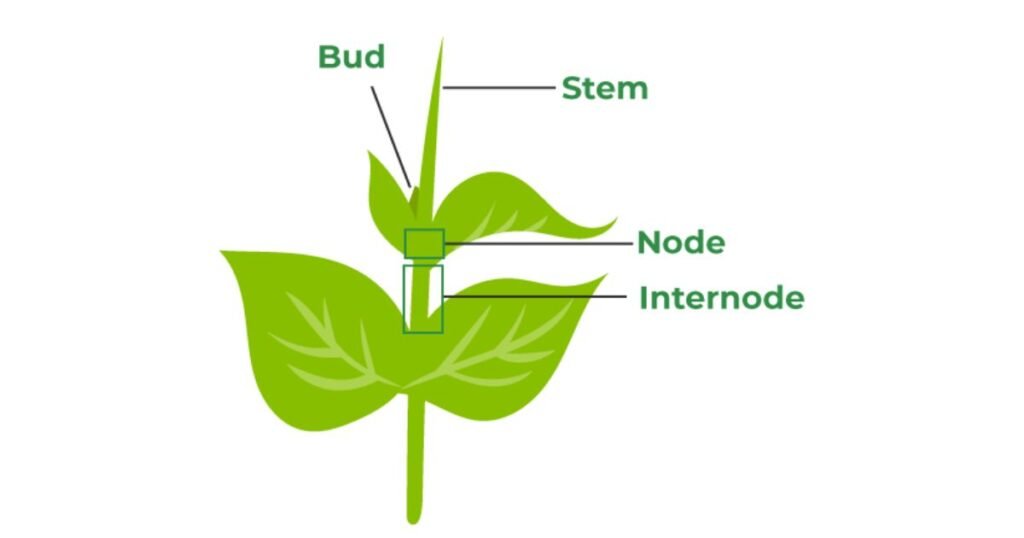
The stem is important to the growth and survival of plants. It helps the plant in supporting the leaves, flowers and fruits and in transporting water and nutrients throughout the plant.
Herbs contain soft stems which are flexible and green. These stems are made up of lesser amounts of woody tissue and therefore soft and can be bent easily.
Shrubs grow woody stems which thicken and grow stronger. These stems assist in the endurance of environmental stress and sustenance of bigger branches by the shrubs.
This is one of the most noticeable differences in the structure of stems between herbs and shrubs.
Root Systems and Stability
Roots play a vital role in the survival of plants as it helps to absorb water and nutrients of the soil. Plants are also firmly rooted by them.
The root of herbs is usually shallow. These roots proliferate near the surface of the soil and are not so deep. It is due to this reason that herbs are easily uprooted.
Shrubs grow deeper and stronger roots that are more stable. The shrubs absorb nutrients contained in deeper layers of soil by use of these roots.
The variation in root strength is also a factor behind the variation of herbs and shrubs.
How to Recognize Herbs and Shrubs?
Determining the herbs and shrubs in the real world involves fine details of observation of some plant characteristics. It is easier to differentiate between them by analyzing the size of plants, textures and branching patterns.
The difference between herbs and shrubs may be identified in the following ways:
- Herbs are small and the stems are soft.
- Shrubs are larger and their stems are woody.
- The number of branches on herbs is typically less.
- Branches are formed on the base of the shrubs.
- The uprooting of herbs is easy as compared to shrubs.
Through the characteristics, one can know the types of plants in a garden, a farm or a forest by observing the characteristics.
Conclusion
Plants are grouped into various categories according to the structure and mode of growth. The two typical types of plants that people will come across in their day to day lives include herbs and shrubs. Knowing the difference between herbs and shrubs assists the student, gardeners and plant enthusiasts in identifying plants more conveniently.
Small plants with tender and soft stems are regarded as herbs. They usually multiply fast and make good utilization in cooking and medicine. The medium-sized plants have woody stems, branches, and a number of branches. They are more likely to be saved due to their stronger structure, which gives them an opportunity to survive many years.
The difference between the herbs and shrubs is evident in terms of size of the plant, the type of stems, the way it is branched, the strength of the root, and the longevity of the plant. Herbs are fragile and pliable, whereas shrubs gain a robust woody structure enhancing their giant growth.
Through an observation of these characteristics, anybody can know the difference between the herbs and shrubs and recognize these two types of plants in nature with certainty.
Also Read About: What Herbs Are Toxic to Cats? 15 Common Herbs to Avoid