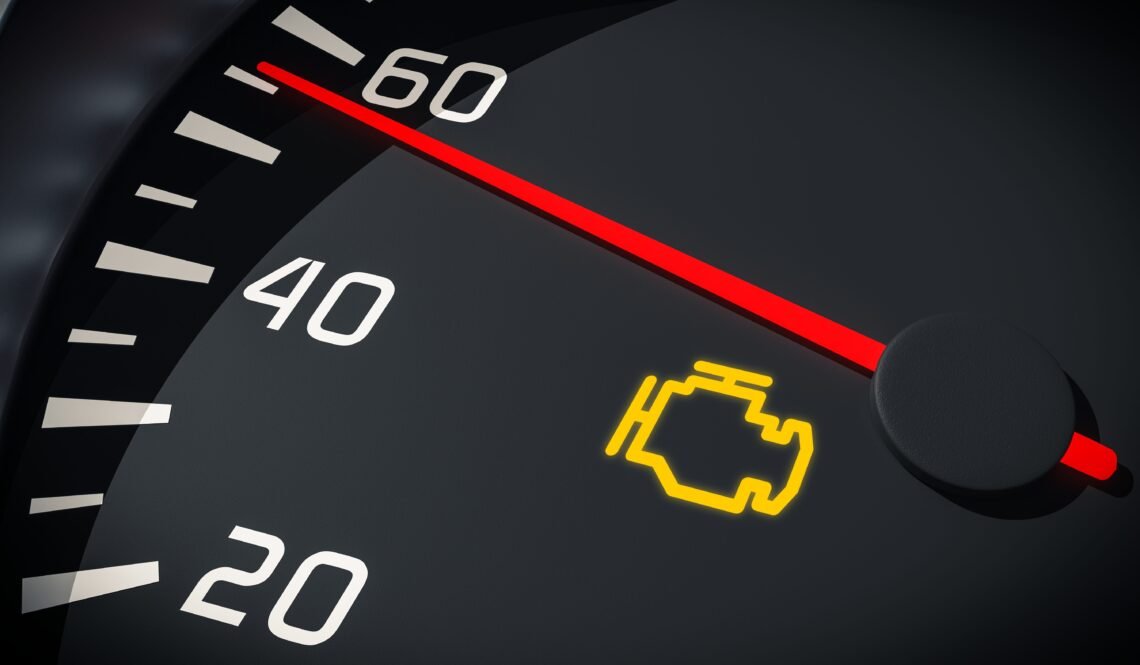
Few dashboard lights cause as much panic as the engine management light.
One minute everything feels normal, and the next you’ve got a yellow engine symbol staring back at you from the dashboard. Naturally, your mind jumps straight to expensive repairs.
The good news is that it doesn’t always mean the worst.
The engine management light (sometimes called the check engine light) can come on for all sorts of reasons. In some cases it’s a minor sensor issue. In others, it’s warning you about a fault that needs looking at before it turns into a much bigger problem.
Why Has My Engine Management Light Come On?
Modern cars are full of sensors. They’re constantly checking things like fuel delivery, emissions, air intake and engine performance. If something doesn’t look right, the car stores a fault code and switches the warning light on.
The frustrating part is that the light doesn’t tell you exactly what’s wrong.
A faulty oxygen sensor, ignition issue, emissions fault or even damaged wiring could all trigger the same warning. That’s why garages use diagnostic equipment to read the fault codes and narrow down the cause.
What Do the Different Warning Lights Mean?
Not all engine management warnings are equally serious.
Solid Amber Light
This is the most common one drivers see.
In many cases, the car will continue driving normally and you may not notice any difference at all. That doesn’t mean you should ignore it though. The vehicle has detected something it isn’t happy with, and it’s worth getting checked sooner rather than later.
Flashing Amber Light
This is where things become more urgent.
A flashing engine management light often points to an engine misfire. Keep driving for too long and you risk damaging the catalytic converter, which can be a very expensive repair.
If the light starts flashing, it’s best to ease off the throttle and arrange for the car to be inspected as soon as possible.
Red Warning Light
A red warning light is generally the car’s way of saying “stop”.
If it appears while you’re driving, find somewhere safe to pull over and switch the engine off. Continuing your journey could cause further damage.
Can I Just Reset the Light?
A lot of people search online for ways to turn the warning light off.
Technically, fault codes can be cleared using diagnostic equipment. The problem is that if the fault hasn’t actually been fixed, the light will usually come back.
In other words, resetting the light doesn’t solve the problem. It just hides it temporarily.
Sometimes the Problem Started Years Ago
This is something many buyers don’t think about.
An engine management light isn’t always linked to a fault that’s happened recently. Sometimes the cause can be traced back to previous accident damage or poor-quality repair work.
Modern vehicles rely heavily on electronics. If wiring, sensors or control modules were damaged during an accident, problems can show up months or even years later.
That’s why it’s worth looking into the vehicle’s history, especially if you’re buying used.
A car that has previously been written off and sold through a salvage auction may have been repaired perfectly well. Equally, it may have underlying issues that aren’t immediately obvious. If a warning light is showing, checking whether the vehicle has a salvage history can sometimes help explain what’s going on.
A quick salvage check could reveal if the car has ever been declared written off, sold through a salvage auction, or suffered significant damage in the past.
Will It Fail an MOT?
Potentially, yes.
If the engine management light is on because of an emissions-related fault, the vehicle is likely to fail its MOT. That’s why many drivers discover the problem just before test day.
Leaving it until the MOT isn’t usually a great idea. What might be a relatively simple fix today could become a more expensive repair further down the line.
Selling a Car with the Light On
You can legally sell a car with an engine management light illuminated, but don’t expect buyers to be enthusiastic about it.
Most people immediately assume the worst when they see a warning light. Whether the fault is minor or major, it tends to knock confidence and reduce the vehicle’s value.
If you’re trading the car in, a dealer will normally factor the fault into their offer. Private buyers will often do exactly the same.
Final Thoughts
An engine management light doesn’t automatically mean you’re facing a huge repair bill. Sometimes it’s something simple. Sometimes it isn’t.
The important thing is finding out why the light is on rather than hoping it goes away by itself.
And if you’re buying a used car with a warning light showing, don’t just focus on the fault code. It’s also worth checking the vehicle’s background. Previous accident damage or a salvage auction history won’t always be obvious, but they can sometimes tell you a lot about the car sitting in front of you.